Home / Our Story
How it started
It began with jars
nobody was selling
It started with Kamla Devi Gehlot filling martbans for the neighbourhood every summer, using her mother-in-law's measure for salt and her own for chilli. People kept asking for a spare jar to send to relatives in Jodhpur and Pali — and the spare jars slowly became the business.
Three decades on, very little about the method has changed. What has changed is the number of jars: what one terrace could produce in a summer now goes out by courier across India, and to distributors who put it on shelves we have never seen.

A terrace in Sojat
Kamla Devi Gehlot begins filling martbans for the neighbourhood each summer, using her mother-in-law's measure for salt and her own for chilli.
From spare jars to a shop
Requests for jars to send to relatives in Jodhpur and Pali outgrow the terrace. The family takes a small premises on Jodhpur Road and begins selling under the Gehlot name.
The range widens
Ker and ker sangri join the line, made from berries and beans bought from pickers around the district. The desert varieties quickly become what people order from outside Rajasthan.
Packed for the road
Tamper-evident jars and printed labels replace hand-tied cloth covers, so the pickle can travel by courier without leaking. Batch dates go on every lid.
Pouches and pan-India dispatch
The Athana Chilli range launches in resealable pouches — lighter to post, easier to keep — and orders start shipping across India.
One recipe book, thirteen jars
The recipes have not moved. Mangoes still come from the same orchards outside town, the mirchi still comes from Mathania, and every jar is still filled by hand.
What Goes Into A Jar
Three things decide whether a pickle is any good, and none of them can be hurried.
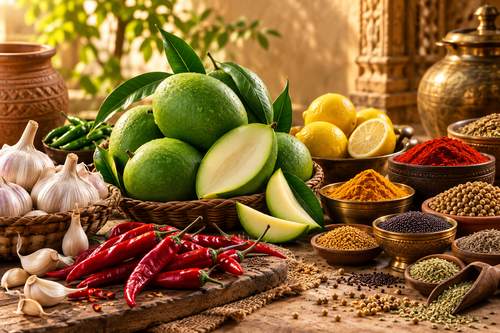
Raw mango, garlic, lemon, green and red chilli, ker and sangri — bought in season, in the quantities a small kitchen can actually work through.
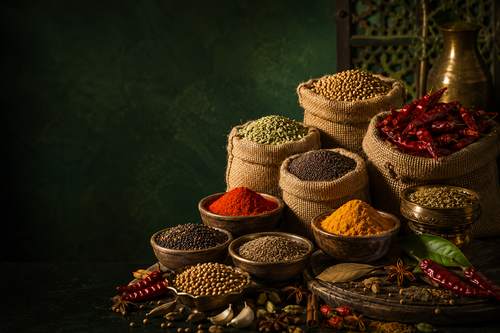
Fennel, fenugreek, nigella, mustard, turmeric and asafoetida, roasted and ground in small lots so nothing sits around losing its oils.
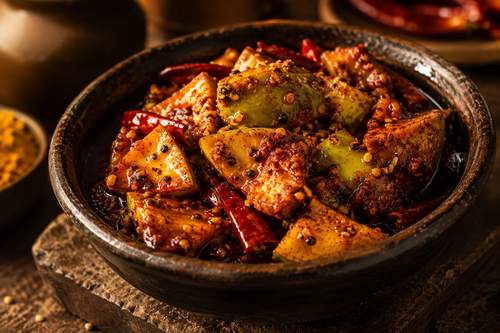
Cut by hand, salted for three days, cured under muslin, then topped with mustard oil, sealed, labelled and dated.
What We Stand For
Ingredients before anything else
Fruit is picked the same morning it is cut and sorted by hand. Anything bruised goes back. The mustard oil is kachi ghani from a local ghani, never a refined blend.
Cured, not accelerated
Every batch sits in the sun until it is ready rather than until it is due. Salt draws the water, the sun does the rest, and the oil seals it. Nothing is added to make it keep longer.
Made to travel
Jars are double-sealed and batch-dated, pouches reseal, and everything is boxed with cushioning. A twelve-month shelf life with no refrigeration, checked batch by batch.
The range
One recipe book,
thirteen jars
Mango, mixed, lemon, garlic, red and green chilli, ker, ker sangri, gunda, keri gunda, desi tadka and the two Athana Chilli pouches — in 250 g and 500 g, with 1 kg and 5 kg on the jars people go through fastest.
See Our Achar »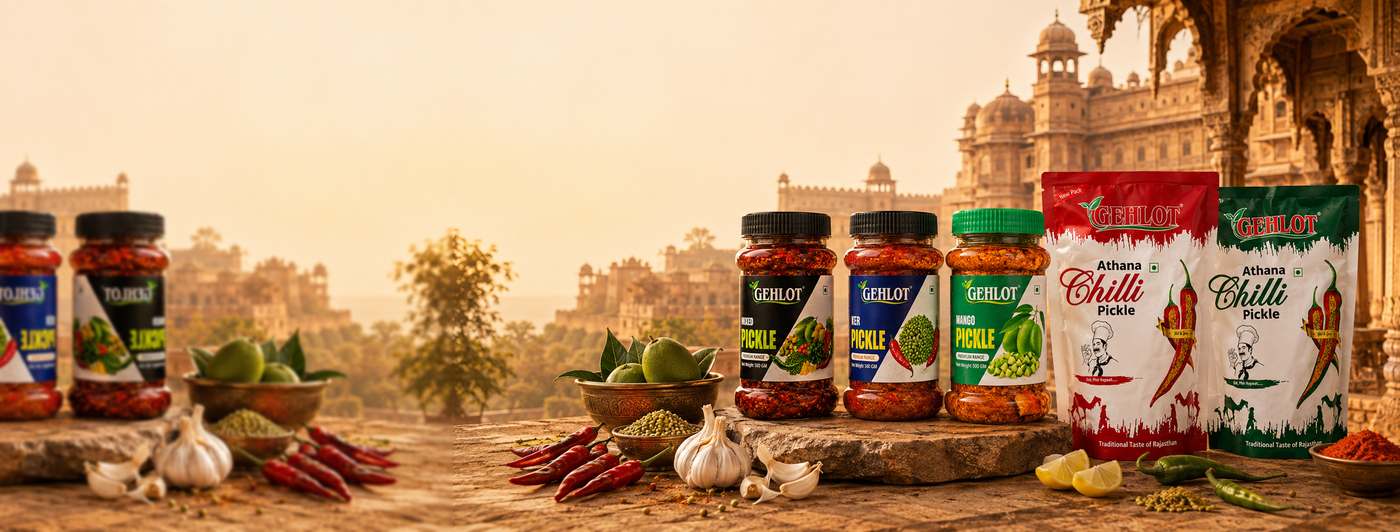
Distributors & exporters
Bring the taste of
Rajasthan to your market
We supply distributors across India and welcome export partners. Consistent batch quality, custom labelling and packaging, and dispatch schedules you can plan around.
For bulk, wedding or corporate quantities — from 25 boxes upwards — send us the volume and the date and we will come back with a quote.